
Introduction
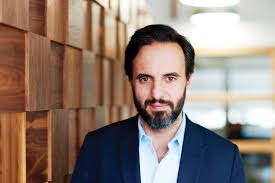
In a world where fashion and technology once seemed like distant cousins, one man had the foresight—and the courage—to merge them into a global force. José Neves, the Portuguese entrepreneur and founder of Farfetch, has done more than build a billion-dollar company. He’s redefined how we shop for luxury fashion in the digital age, bridging the gap between high-end boutiques and customers across the world.
But José’s journey wasn’t just about launching a successful eCommerce site. It was a winding path filled with setbacks, bold experiments, and relentless innovation. His story is one of vision, grit, and the quiet persistence that builds empires.
This is the story of how a Portuguese boy with a passion for coding and shoes built a fashion-tech revolution.
Humble Beginnings in Portugal
Born in 1974 in Porto, Portugal, José Neves grew up in a country better known for its traditional industries than for fashion or technology. From a young age, José showed a curious mix of interests—technology, business, and design. While other kids played football in the streets, José was already fiddling with computers, learning to code by the age of 8.
Raised in a family of entrepreneurs, José was deeply influenced by his grandfather, who owned a shoe factory. He was exposed early to the world of craftsmanship, operations, and business management. Little did he know that this exposure to shoes and fashion would play a defining role in his future.
But technology was his first love. In his teenage years, he taught himself programming, eventually earning a degree in economics from the University of Porto. While the world saw him as a typical university graduate, José was already plotting his entrepreneurial future.
Early Ventures: From Software to Sneakers
Before Farfetch, there were failures, experiments, and unexpected successes. José’s first company wasn’t fashion—it was Grey Matter, a software firm he founded at just 22 years old. Grey Matter built software for small fashion retailers, marking José’s first serious foray into combining tech and fashion.
But the itch to build something more tangible—something stylish—persisted. In 1996, he launched Swear, a sneaker brand that fused urban edge with designer quality. It was bold, niche, and different.
To bring Swear to the world, José opened a Swear boutique in London. He didn’t just stop at sneakers. He founded a fashion retail business called bstore, which won critical acclaim and even received a British Fashion Award. bstore became a platform for emerging designers, showing José’s eye for innovation and risk-taking.
But despite these ventures, the limitations of traditional retail gnawed at him. Stock issues, low footfall, and poor global reach frustrated him. He realized the luxury retail industry was fragmented—most boutiques lacked the tech to sell online, yet the demand for luxury was going global. That insight sparked the idea that would become Farfetch.
The Birth of Farfetch: A Radical New Vision
In 2007, José founded Farfetch—a name that would soon become synonymous with luxury fashion and digital disruption. But the concept was radically different from anything else at the time.
Farfetch was not a retailer. It was a marketplace, a platform that connected small, independent luxury boutiques around the world to customers via one centralized, user-friendly digital portal.
This was revolutionary.
In an era when eCommerce was dominated by Amazon’s mass-market model, José dared to think different. He understood that luxury fashion wasn’t about discounts or speed—it was about storytelling, exclusivity, craftsmanship, and customer experience. The boutiques had the products, but they lacked the digital tools. Farfetch gave them the stage.
In 2008, Farfetch launched with just 10 boutiques. It was a slow start. Investors were skeptical. Luxury brands were notoriously protective. Could an outsider from Portugal really disrupt this secretive, elite industry? José thought so. And he was right.
Building a Global Luxury Empire
Farfetch’s growth was steady, then explosive. From 10 boutiques in 2008 to over 1,300 partners in more than 50 countries, Farfetch quickly became the go-to online destination for luxury fashion. It offered a level of variety, exclusivity, and access that no single retailer could match. Customers in New York could shop from a boutique in Milan. A rare Japanese designer could reach a fashionista in Dubai. And every transaction felt curated, personal, and premium.
Investors started to pay attention. In 2010, Farfetch raised its first round of funding. By 2015, it was valued at over $1 billion, officially entering the unicorn club. But José wasn’t done. He continued innovating—launching Farfetch Black & White (a white-label platform for brands), Store of the Future (blending physical and digital shopping), and acquiring Stadium Goods (sneakers) and New Guards Group (the group behind Off-White, Palm Angels, and Heron Preston).
In 2018, Farfetch went public on the New York Stock Exchange, with a valuation of nearly $6 billion. For a kid from Porto with a passion for code and shoes, it was the ultimate validation.
Visionary Leadership and Culture
José Neves is not your typical fashion CEO. He doesn’t chase the limelight. He dresses simply, speaks thoughtfully, and spends his time between London and Lisbon, where Farfetch has a major tech hub.
What sets José apart is not just his ideas—but his execution and culture. He believes in decentralization, empowerment, and diversity. Farfetch employees come from over 90 nationalities. The company champions sustainability, ethical fashion, and next-gen shopping experiences.
José is obsessed with the future of fashion retail. He doesn’t see Farfetch as just an online store; it’s a platform, an ecosystem, a bridge between old-world luxury and the digital-first generation.
Hard Lessons and Resilience
Like any great entrepreneur, José’s journey has had challenges. Farfetch has faced criticism for its high operational costs, slow path to profitability, and complex logistics model. The acquisition of New Guards Group, while strategic, also drew mixed reactions.
Yet José remains steady. He believes in long-term thinking over quarterly wins. He invests in tech, brand relationships, and customer experience. Even as other fashion tech firms struggle, Farfetch continues to evolve.
During the COVID-19 pandemic, Farfetch saw a surge in demand, but José didn’t just sit back. He used the crisis to double down on partnerships, including one with Richemont and Alibaba, signaling Farfetch’s expansion into China—the holy grail of luxury.
In 2020, Farfetch launched Farfetch Platform Solutions, allowing luxury brands to run their own online stores using Farfetch’s tech. It’s another sign that José isn’t just competing, he’s becoming the infrastructure behind luxury fashion online.
Personal Life and Philosophy
Despite his massive success, José Neves is known for his humility. He rarely makes headlines for anything outside business. He’s a family man, a thinker, and a deeply philosophical leader. He credits much of his success to curiosity, patience, and purpose.
In interviews, José often shares his belief in “thinking in decades”, not just in years. He encourages young entrepreneurs to follow their gut, embrace failure, and build businesses that matter.
He’s also a big believer in blending creativity with science, fashion and tech, emotion and logic, art and engineering. This balance, he believes, is the secret to innovation.
Legacy and Inspiration
Today, José Neves stands as one of the most influential fashion entrepreneurs of the 21st century. He didn’t invent luxury fashion. He didn’t invent eCommerce. But he reimagined how the two could coexist.
His legacy isn’t just Farfetch—it’s the platform mindset. The idea that you don’t have to own the product to deliver value. That you can empower others while building something scalable. That tech can elevate, not cheapen, the luxury experience.
For young entrepreneurs, José Neves offers countless lessons:
Stay curious, humble, and persistent.
Start small, but think globally.
Combine your passions in unexpected ways.
Use technology to empower—not replace—creativity.
Focus on long-term value, not quick wins.
Conclusion: The Future According to José Neves
As fashion continues to evolve, José Neves is already thinking ahead. Whether it’s AI-driven personalization, blockchain for product authentication, or fully immersive digital fashion experiences, he’s leading the charge.
For José, the mission is clear: to be the platform for the global luxury industry.
In a world that often celebrates loud, brash founders, José Neves reminds us of a different kind of leadership: quiet, steady, visionary, and deeply human. From a small city in Portugal to the boardrooms of the world’s most iconic fashion houses, his journey is a beacon for anyone with a dream and the discipline to see it through.


 By
By

 By
By