It starts with something small—your cup of coffee spilling near your keyboard, a pile of unopened mail growing in the corner, or the constant buzz of notifications stealing your focus. Before you know it, your workspace begins to feel more like a source of stress than a space of creativity. And even though you’re sitting at your desk, your mind is everywhere but your task.
The truth is, your environment silently shapes your performance. It’s not just about where you work—it’s about how that space makes you feel. The clutter, the lighting, the chair you sit on, and even the colors on your walls influence your focus, mood, and productivity more than you might think.

Creating a productive workspace isn’t about making it Pinterest-perfect or overly minimalist. It’s about designing a space that supports your goals, respects your comfort, and sparks your drive. Whether you work from home, a shared office, or a personal studio, a few intentional changes can make your space not just functional—but energizing.
In this post, we’ll walk through proven, practical tips to help you build a workspace that brings out your best work every day. You don’t need to overhaul everything—you just need to start where you are, and create a space that works for you.
1. Start With Decluttering and Simplifying
Clutter doesn’t just crowd your space—it clouds your mind. When your desk is filled with stacks of papers, cables, and random things you haven’t used in months, it becomes harder to concentrate. You end up spending more time managing the mess than managing your work.
Start by removing everything you don’t use regularly. Go through each item and ask yourself, “Do I really need this here?” If it’s not essential, find a new home for it or let it go. Keep only what you use daily within arm’s reach. A clear space makes room for clear thinking.
Decluttering doesn’t mean stripping away your personality. It means simplifying what’s around you so your energy is spent doing, not digging.
2. Invest in Ergonomic Comfort
Comfort is productivity’s best friend. If your chair gives you back pain or your desk is too high, your body will constantly distract you from your work. You don’t need to buy the most expensive office chair, but choosing ergonomically friendly furniture is a worthwhile investment.
Look for a chair that supports your lower back and lets your feet rest flat on the floor. Your screen should be at eye level to prevent neck strain, and your wrists should rest comfortably when typing.
Small changes—like a laptop stand, a footrest, or a cushion—can make a big difference. When your body feels good, your mind can stay focused longer and function better.
3. Use Natural Light (or Imitate It Well)
Natural light does more than brighten a room—it boosts your energy, mood, and focus. If you can, position your desk near a window. Exposure to daylight helps regulate your body’s internal clock, improving both alertness and sleep patterns.
If natural light isn’t an option, invest in quality lighting that mimics daylight. Soft white or daylight bulbs work best. Avoid harsh overhead lights that can cause headaches, and instead, use desk lamps or floor lamps that offer adjustable brightness.
The right lighting doesn’t just help you see better—it helps you feel better.

4. Choose Calming, Motivating Colors
Colors affect how we feel. A workspace filled with colors that energize or calm you can have a positive effect on how much you get done. Blue tones promote calm and concentration, while greens feel fresh and peaceful. Yellows can spark creativity and optimism, while soft neutrals create a grounding environment.
Avoid overly dark or jarring colors that might create heaviness or visual fatigue. You don’t need to repaint the whole room—a few well-chosen pieces of decor, wall art, or office accessories can introduce just enough color to shift the atmosphere.
Think about how you want to feel in your workspace—and let color help get you there.
5. Add a Personal Touch
Your workspace should feel like you. Personalizing your space with meaningful items can help you feel more connected to it—and more motivated to spend time there. This doesn’t mean filling every inch with photos and trinkets, but a few intentional touches can uplift your mood.
Maybe it’s a framed quote that inspires you, a photo of a loved one, or a souvenir from a place that changed you. Maybe it’s your favorite coffee mug or a cozy throw blanket over your chair.
These small elements serve as emotional anchors—reminders of who you are and why your work matters.
6. Incorporate Nature Indoors
Bringing a little nature into your workspace can make it feel more alive and balanced. Studies show that plants can reduce stress, improve air quality, and boost focus. Even looking at greenery for a few seconds can refresh your mind.
Choose low-maintenance plants like pothos, snake plants, or succulents if you’re new to plant care. If live plants aren’t an option, even a nature-inspired print or wooden decor piece can add a sense of calm.
Nature reminds us to breathe. It softens the edges of our digital world and helps us feel more grounded.
7. Minimize Distractions With Thoughtful Layout
Where you place things matters. If your workspace faces the hallway or your TV, you’re more likely to get distracted. Try to set up your desk in a way that minimizes interruptions—whether that’s facing a wall, a window, or simply using a divider.
Keep your phone out of arm’s reach if it’s not essential for work. Use noise-canceling headphones or play soft background music if noise is an issue.
Sometimes, productivity is just about protecting your focus. A smart layout helps you stay in flow longer without constant mental detours.
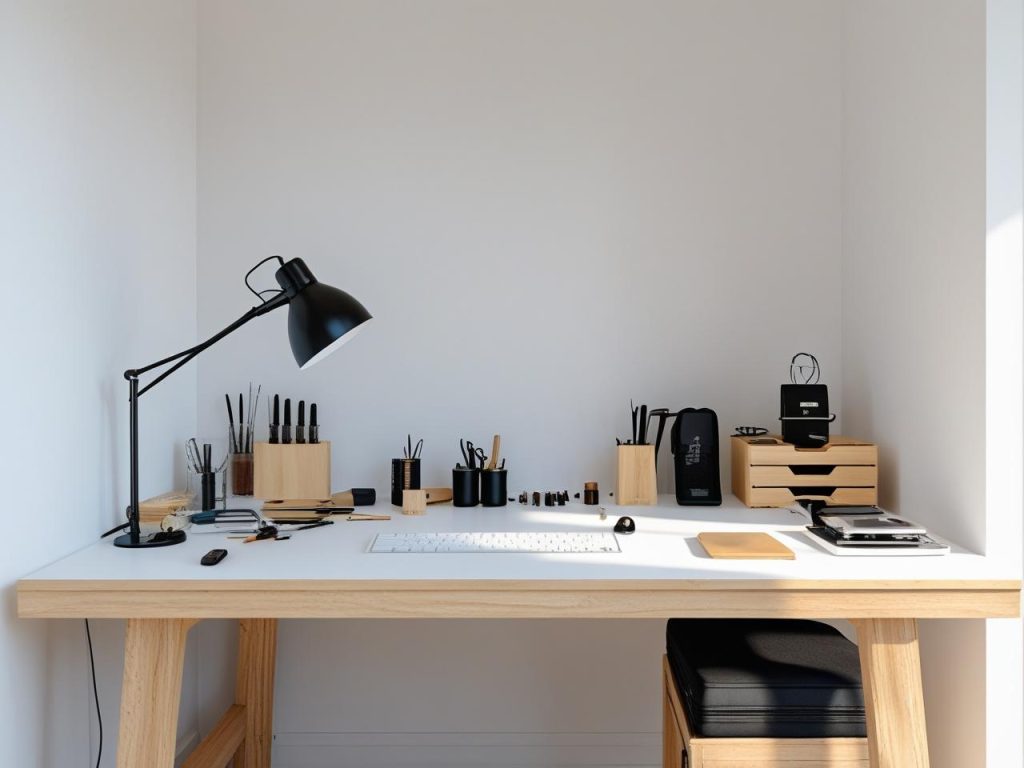
8. Use Organizational Tools That Make Sense to You
You don’t need a wall full of color-coded binders to be organized. What matters is that your system works for you. Whether it’s digital tools or physical files, choose methods that feel natural to manage and maintain.
Desk organizers, cable clips, drawer dividers, and document trays can reduce visual mess. Digital tools like Trello, Notion, or Google Calendar can help you stay on track with tasks and appointments.
The goal is to spend less time looking for things and more time doing what matters. A workspace that’s well-organized is a mind that’s well-prepared.
9. Create Zones for Different Tasks
If you have the space, creating different zones within your workspace can help you stay focused and avoid burnout. For example, one corner of your desk can be for laptop work, another for writing or sketching, and a nearby shelf for reading or brainstorming.
Even if your space is small, subtle shifts like using a different chair or table for creative tasks can help your brain transition between modes. When each task has its space, your mind learns to associate environments with energy and focus.
These mental boundaries make it easier to stay in rhythm—and harder to fall into procrastination.
10. Keep Essentials Within Reach
Frequent interruptions kill momentum. If you’re constantly getting up for pens, chargers, or your notebook, it’s time to streamline your space. Keep your most-used items within reach: water bottle, sticky notes, planner, or headphones.
Use small storage containers or drawers to keep everything in its place. Label cables or containers if you tend to forget what’s what.
Convenience creates flow. A well-placed drawer or a pegboard with tools can help you stay immersed in your work without unnecessary stops and starts.
11. Introduce Light Movement Into Your Setup
Sitting still for hours doesn’t just drain energy—it damages your health over time. Try to introduce light movement into your workday by adjusting your setup. Consider a sit-stand desk or a balance ball chair to alternate postures.
Even standing for 10 minutes every hour can refresh your circulation and focus. You can also keep a stretch band or hand grip near your desk for small movements during breaks.
Movement wakes up the body, and a body that feels alive supports a mind that’s alert.
12. Use Scent to Shape Your Mood
Scent has a powerful connection to memory and emotion. A subtle diffuser with lavender, peppermint, or citrus oil can help you shift into focus mode or wind down after intense work.
Lavender and eucalyptus can calm anxiety. Peppermint and citrus can sharpen focus and energize the mind. You don’t need strong fragrances—just a light scent in the air can make your space feel more intentional and inviting.
Scent is often the missing layer in workspace design—but it can quietly uplift your entire mood.
13. Set Boundaries Around Your Space
Your workspace deserves respect—both from yourself and others. If you work from home, create clear boundaries with housemates or family. Let them know when you’re “in the zone” and when it’s okay to chat.
Avoid turning your workspace into a catch-all area. No laundry piles, no dinner plates, no late-night movie marathons. When your space is for work, your mind learns to associate it with focus and purpose.
Boundaries protect your energy. And they turn your workspace into a zone where you feel empowered, not distracted.
14. Do a Weekly Reset
No matter how perfect your setup is, things get messy during the week. Papers pile up, coffee mugs appear, and that drawer you promised to organize stays untouched.
That’s why a weekly reset is so important.
Pick one day a week—Friday afternoon or Sunday evening—to tidy up, wipe surfaces, restock supplies, and refresh your space. It’s like giving your workspace a deep breath. Starting the new week with a clean, organized space can feel incredibly empowering.
A reset isn’t just about cleaning—it’s about resetting yourself.
15. Let Your Workspace Evolve With You
You’re not the same person you were six months ago—and your workspace shouldn’t be either. As your goals shift, habits change, or seasons of life evolve, give yourself permission to adapt your environment.
Maybe you need more visual inspiration now, or more quiet space later. Maybe you want to change the layout, update your tools, or swap your chair for a standing desk.
Your workspace should grow with you. Check in often. Ask yourself, “Does this space still support who I am and what I’m working toward?”
The most productive workspaces are the ones that evolve—not just in design, but in purpose.
Conclusion
Creating a productive workspace isn’t about getting it perfect—it’s about getting it right for you. It’s a balance between comfort and focus, simplicity and inspiration. It’s about creating a space where your mind feels calm, your body feels supported, and your heart feels connected to the work you’re doing.
Whether you’re working in a cozy corner of your bedroom or a sunlit studio downtown, every choice you make in your space shapes your experience. Start small. Declutter a drawer. Adjust your chair. Add a plant. And from there, let your workspace grow into a place that truly fuels your productivity—and your purpose.
Because when your space works with you, not against you, every day becomes a little more powerful.


 By
By

 By
By